A common misconception in DeFi is that a transaction is safe if the wallet can display its fee, destination, and token amount clearly. Those details matter, but they describe the request more than the result. A decentralized application, or dApp, may ask a wallet to sign a contract call whose consequences depend on smart-contract logic, token permissions, current state, and the order in which transactions are executed. Transaction simulation addresses this gap by asking a more useful question: what would probably happen if this transaction were executed now?
That change in perspective is important for US-based DeFi users moving between Ethereum and other EVM-compatible networks. A simulation can expose an unexpected token transfer, a suspicious approval, a failed swap, or an asset that would be received only after several contract calls complete. But it is not an oracle of safety. It is a model of a changing system. Understanding what the model can see—and what it cannot—is the foundation of sensible wallet security.
How dApp integration turns a signature into a testable event
When a user connects a wallet to a dApp, the visible interface is only one layer of the interaction. The dApp typically prepares a transaction containing a target contract address, a function call, encoded arguments, and a proposed amount of gas. The wallet then presents that request for approval. In a simple transfer, the meaning may be relatively direct. In a decentralized exchange, lending market, bridge, or NFT marketplace, a single click can trigger several state changes across contracts.
Transaction simulation works by executing the proposed call against a representation of the blockchain state, often without broadcasting it as a finalized transaction. The execution engine follows the contract’s instructions and reports outcomes such as whether the call would revert, which balances would change, and which permissions may be created or consumed. In practical terms, the wallet is not merely repeating the dApp’s description. It is comparing the requested action with an estimated post-transaction state.
This distinction explains why dApp integration is difficult. A wallet must interpret requests produced by many different interfaces while preserving the contract-level facts underneath. It may need to decode function calls, identify token movements, distinguish an approval from a transfer, and show the user which assets leave the wallet and which should arrive. The quality of the result depends on the simulation environment, the chain, the contract’s behavior, and the information available at the moment of analysis.
Consider a token approval. The immediate transaction may not transfer any tokens at all; instead, it grants a contract permission to move them later. A superficial review of the current balance could therefore miss the economic significance of the request. Simulation and permission analysis together create a sharper mental model: risk is not limited to what changes now, but includes what the user authorizes another contract to do afterward.
What a simulation can reveal—and what it cannot
The strongest use of simulation is consequence detection. If a swap is expected to send one asset and return another, the wallet can compare that expectation with the simulated result. If a call reverts, the user may avoid paying a fee for a transaction that cannot complete. If an NFT listing or marketplace interaction contains an unexpected transfer, that discrepancy becomes a reason to stop and investigate. These are practical defenses against both honest interface errors and malicious requests.
Simulation can also reduce a frequent source of user error: signing a transaction whose technical structure is opaque. Smart contracts do not understand the friendly language shown by a website; they process encoded instructions. A wallet that translates those instructions into anticipated balance changes, approvals, and contract interactions gives the user an additional review layer. It does not eliminate the need to inspect the dApp, but it makes the signing decision less dependent on trust in a single front end.
The boundary is just as important. A successful simulation does not prove that a contract is honest, audited, or economically sound. It usually represents one possible execution under a particular block state. Prices can move, liquidity can disappear, oracle values can update, and another transaction can be inserted before the user’s transaction is mined. A contract may also contain behavior that depends on conditions not captured by the simulation environment. “Would execute” and “is wise to execute” are different conclusions.
There is a second limitation: simulation may detect effects without fully judging intent. Receiving an unfamiliar token, interacting with a newly deployed contract, or granting a broad allowance may be visible in the output, but the wallet cannot turn every unfamiliar event into a definitive verdict. Security systems must balance false positives against missed threats. Excessive warnings train users to approve reflexively; too few warnings create dangerous confidence. Good risk assessment is therefore partly a design problem, not only an engineering problem.
A practical framework for assessing a simulated transaction
Before signing, DeFi users can treat the wallet’s analysis as a structured conversation with four questions. First, what is the transaction supposed to do? Name the economic action in ordinary language: swap, deposit, borrow, claim, list, bridge, or approve. Second, what does the simulation say will actually change? Compare outgoing assets, incoming assets, fees, and permissions with the intended action. A mismatch is more significant than a reassuring visual design on the dApp page.
Third, what authority is being granted? Approvals deserve special attention because they can outlive the immediate interaction. A limited allowance may constrain potential loss, while an unlimited allowance can increase the consequences of a later contract compromise or misuse. The best choice depends on usability and contract behavior, but the trade-off should be visible rather than hidden behind a single “confirm” button.
Fourth, what assumptions does the result depend on? A swap simulation may depend on current liquidity and price impact. A lending transaction may depend on collateral values and utilization. A bridge may involve more than one chain and a delayed settlement process. If the action is large relative to the market, or if the protocol is new, the simulated output deserves more skepticism than a routine, well-understood interaction.
This framework is useful because it separates three kinds of confidence that are often confused. Execution confidence asks whether the transaction is likely to run. Interpretation confidence asks whether the wallet has correctly decoded what it will do. Trust confidence asks whether the contract and surrounding protocol deserve authorization. Simulation primarily improves the first two. The third still requires contract reputation, protocol research, operational caution, and sometimes independent review.
Why wallet-level integration matters
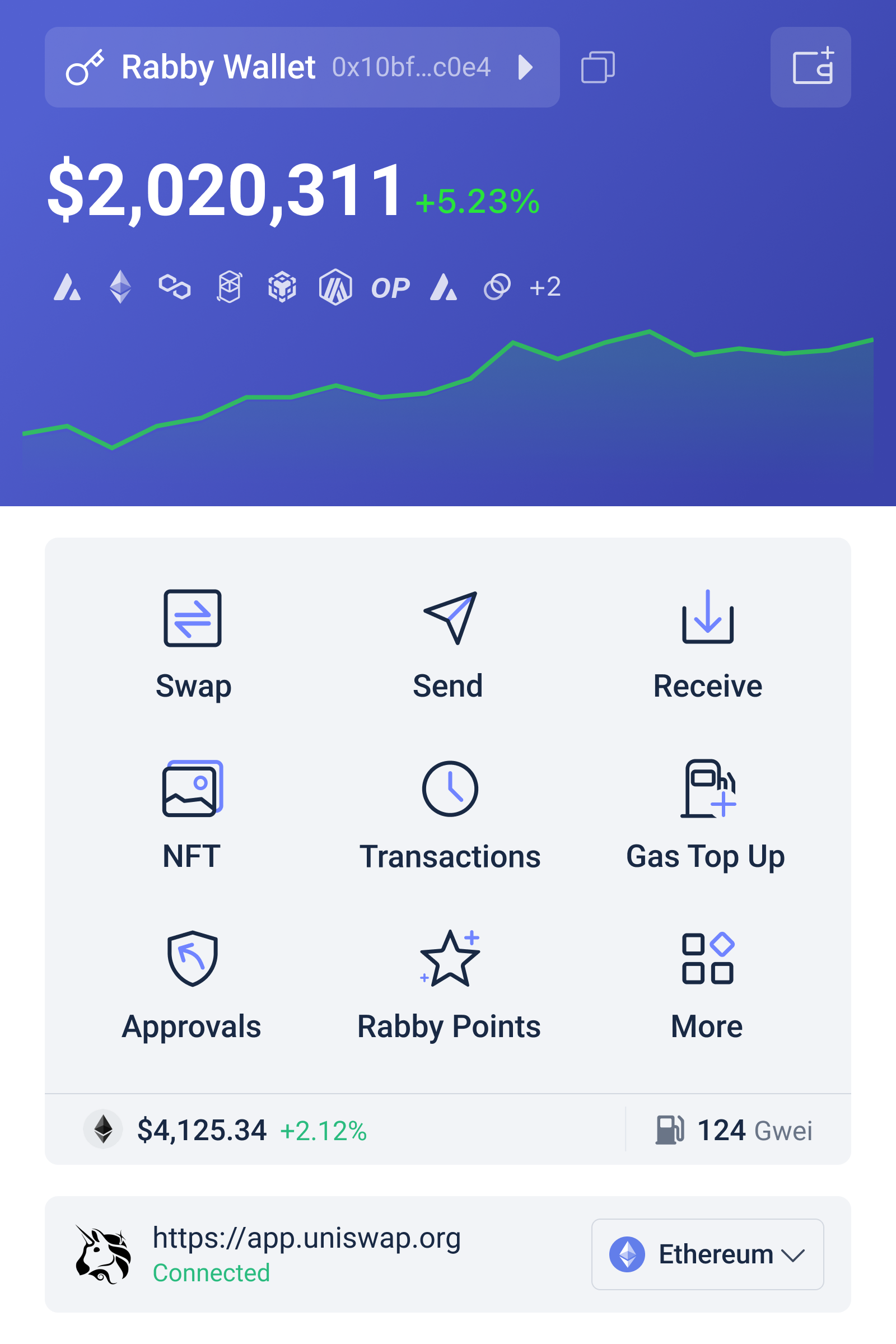
A security feature is most useful when it appears at the moment a user is about to sign. If risk information is separated from the transaction flow, users may not consult it under time pressure or during a fast-moving market. Wallet-level integration can place simulation results, chain context, contract information, and permission changes beside the approval decision. For readers comparing an advanced EVM wallet, the appeal of rabby wallet is therefore best understood through this workflow: it aims to make the transaction itself the object of review, rather than asking users to infer safety from a dApp’s interface alone.
Recent project messaging describes Rabby Wallet as a wallet for Ethereum and EVM chains, with emphasis on on-chain use and access through browsers such as Chrome and Brave. That positioning is relevant to simulation because multi-chain convenience can increase the number of environments a user interacts with. It can also increase cognitive load: addresses, token standards, gas assets, bridge routes, and contract deployments may differ from one network to another. A security-oriented wallet has to reduce that complexity without implying that all EVM chains carry identical assumptions or risk.
The central trade-off is convenience versus deliberation. A wallet that automatically explains many transactions can make routine DeFi activity faster and safer to review. Yet automation can become a liability if users treat a green result as permission to stop thinking. The right design goal is not friction everywhere. It is selective friction where the proposed action is unusual, high-impact, difficult to reverse, or inconsistent with the user’s stated intent.
What to watch as the tooling develops
If transaction simulation becomes more deeply integrated into wallets, the important question will not simply be whether a simulation exists. It will be how transparently the wallet communicates uncertainty. Useful signals could include the age and identity of the target contract, the scope of approvals, the assets at risk, whether the call crosses chains, and which parts of the result depend on volatile state. Users should also watch how often a wallet distinguishes an execution warning from a broader judgment about protocol trust.
A plausible near-term direction is richer pre-signing context: simulations that show not only balances but also permission duration, contract relationships, and differences between the dApp’s declared intention and the call’s observed effects. That would be valuable if the information remains understandable. More data is not automatically better security; an unreadable warning panel can be functionally equivalent to no warning at all. The evidence to monitor is whether users can make fewer accidental approvals without becoming desensitized to alerts.
For now, the most reliable habit is simple: use simulation as a checkpoint, not a guarantee. Stop when the predicted outcome differs from the intended one. Treat broad approvals and unfamiliar contracts as separate risks. Recheck the network and the asset being used for fees. For large or irreversible transactions, consider a smaller test or a separate wallet when practical. These steps acknowledge an uncomfortable fact of Web3: no wallet can convert an adversarial, rapidly changing environment into a risk-free one.
Frequently asked questions
Does a successful transaction simulation mean a dApp is safe?
No. It generally indicates that the proposed call can execute under the simulated conditions and may reveal expected state changes. It does not establish that the contract is legitimate, that its economics are sound, or that the same result will occur after market conditions and blockchain state change.
Why are token approvals important in transaction risk assessment?
An approval can authorize a contract to move tokens later, even when the current transaction does not transfer them. The size and duration of that permission affect potential exposure. Users should compare the allowance with the intended action and be cautious when a dApp requests authority broader than the task appears to require.
What should I do when the simulation fails or shows an unexpected result?
Do not sign automatically. Check the selected network, wallet balance, token allowance, slippage settings, and the dApp’s intended action. A failure may reflect insufficient funds or an ordinary contract condition, but it can also signal that the request is malformed or not what the interface suggests. Investigate before retrying.
Leave a Reply